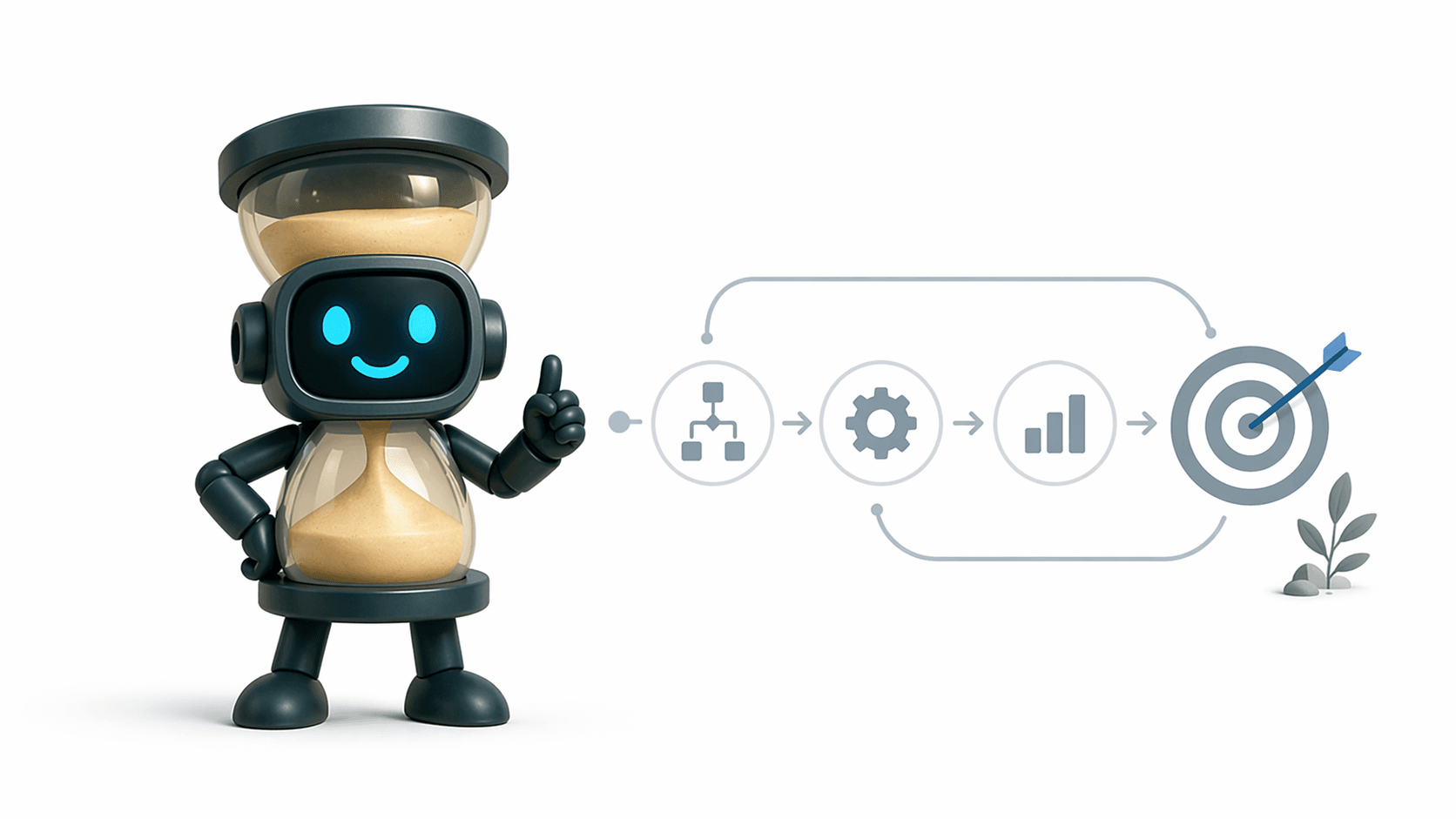
You Don’t Need More AI Automation, You Need Better Business Process Design
Most companies don’t have an automation problem. They have a structure problem.
Yet the default reaction is predictable. Something feels slow, repetitive, or messy, so another tool gets added. Another workflow. Another AI layer. It feels like progress because something new is happening. But if the underlying process is unclear, automation just scales the confusion.
This is where things start to break quietly.
The goal here is simple. Understand why more automation is often the wrong move, and what actually needs to be fixed first if you want systems that hold up over time.
Why AI automation fails without process design K.B Consultancy insight
There’s a pattern we keep seeing. A company invests in automation, sometimes heavily, and still ends up with manual workarounds everywhere. People double check outputs. Teams stop trusting the system. Eventually, someone builds a spreadsheet on the side just to stay in control.
That doesn’t happen because the tools are bad. It happens because the process underneath was never clearly defined.
Automation needs something stable to attach to. If your workflow changes every week, if responsibilities are unclear, or if data moves differently depending on who handles it, automation has nothing solid to work with.
So what do you get instead? Fragile systems. Small changes break everything. Nobody wants to touch it anymore.
At K.B Consultancy, this is usually the point where companies reach out. Not when they start automating, but when the automation stops making sense.
What better business process design actually looks like in practice K.B Consultancy approach
Process design sounds abstract until you look at how work actually flows inside a company.
Take something simple like handling incoming leads. On paper, it looks straightforward. In reality, it often depends on who is available, which channel the lead came from, and how complete the information is. Different people handle it differently. Follow ups vary. Data gets lost between tools.
Now imagine automating that.
Without fixing the process, you’re just locking in inconsistency. Faster responses maybe, but still inconsistent. That is not scale, that is chaos at speed.
Better process design means making decisions upfront. What qualifies as a lead worth acting on. Where it enters the system. Who owns it at each step. What information is required before moving forward.
Only when that is clear does automation start to make sense. Then it becomes predictable. Reliable. Something the team can actually trust.
This is why at K.B Consultancy, automation is never the starting point. It’s a consequence of clarity.
The shift from experimenting with AI to demanding real operational results K.B Consultancy perspective
A year ago, most companies were experimenting. Trying tools, testing ideas, seeing what AI could do.
Now the expectation has changed. Tools are no longer impressive on their own. They need to produce results that show up in daily operations. Less manual work. Faster decisions. Fewer errors.
This shift exposes weak foundations quickly.
If your processes are unclear, no amount of AI will fix that. In fact, it makes the gap more visible. You start noticing how often things need human correction. How often exceptions occur. How often the system doesn’t quite match reality.
That’s why there’s a growing move away from stacking tools toward rethinking workflows. Not in theory, but in how work actually gets done across teams.
It’s less exciting than buying new software, but it’s where the real gains are.
Where most businesses get stuck with automation and systems K.B Consultancy observation
The issue is rarely a lack of effort. Teams are trying to improve things. They just focus on the wrong layer.
They automate tasks instead of designing flows.
A task is one step. A flow is how work moves from start to finish. If the flow is broken, optimizing individual steps doesn’t solve much.
You end up with pockets of efficiency inside an inefficient system.
Another common issue is fragmentation. Different teams adopt their own tools. Sales uses one system, operations another, support something else entirely. Data doesn’t move cleanly between them. So people step in manually to bridge the gaps.
Automation in that environment becomes patchwork. Small fixes everywhere, no real cohesion.
The work K.B Consultancy does usually starts by mapping this out. Not to document it for the sake of it, but to see where things actually slow down, where decisions get stuck, and where ownership becomes unclear.
AI automation that actually works starts with structure K.B Consultancy conclusion
There’s nothing wrong with AI automation. It’s powerful when used in the right context.
But it’s not a shortcut to fixing messy operations.
If your processes are unclear, automation will amplify that. If your systems don’t connect, automation will expose that. If your team relies on workarounds, automation will struggle to replace them.
Better process design does the opposite. It creates something stable. Something repeatable. Something automation can actually support instead of constantly fighting against.
That’s the difference.
Not more tools. Not more workflows.
Just better structure underneath everything.
5 April 2026