When Teams Stop Trusting Your AI Systems, Business Growth Starts to Stall
At first, it’s subtle.
A team member double checks an output “just in case.” Someone exports data to review it manually before taking action. A workflow that was supposed to run automatically suddenly has a human checkpoint added back in.
No one announces it, but the signal is clear. Trust in the system is slipping.
And once that happens, growth doesn’t just slow down. It becomes harder to sustain at all.
Because AI systems only create leverage when people rely on them. Without that trust, they turn into suggestions instead of infrastructure.
Why trust in AI systems breaks down in real operations K.B Consultancy insight
Most AI systems don’t fail all at once. They erode.
It starts with small inconsistencies. Outputs that are mostly right, but not reliable enough to act on without checking. Edge cases that the system doesn’t handle well. Data that doesn’t quite match what teams see elsewhere.
Individually, these are manageable. Together, they change behavior.
People adapt quickly. They build habits around the system’s weaknesses. They verify, adjust, sometimes bypass it completely. The system still runs, but it’s no longer driving decisions.
At K.B Consultancy, this is usually where the real issue becomes visible. Not in the performance of the AI itself, but in how people respond to it over time.
The link between unreliable systems and stalled business growth K.B Consultancy perspective
Growth depends on consistency.
If your operations rely on people constantly checking, correcting, or redoing what the system produces, you lose that consistency. Work slows down. Decisions take longer. Bottlenecks start to form in places that were supposed to be automated.
And more importantly, scaling becomes difficult.
You can’t easily onboard new team members into a system that isn’t fully trusted. You can’t increase volume if every output needs human validation. What looked like efficiency at a smaller scale becomes friction as the business grows.
This is where many companies get stuck. They have invested in AI, but the operational reality doesn’t match the expectation.
The system exists, but it doesn’t carry the weight it was supposed to.
Where AI automation fails without strong process design K.B Consultancy approach
When trust drops, the instinct is often to improve the AI itself. Better models, more training data, additional tools.
Sometimes that helps. Often it doesn’t solve the core issue.
Because the problem usually sits underneath the AI.
If the process feeding the system is inconsistent, the outputs will be inconsistent. If different teams use different definitions or handle inputs differently, the AI has no stable ground to work from.
You end up trying to fix symptoms instead of the structure causing them.
At K.B Consultancy, the focus shifts quickly at this point. Instead of asking how to improve the AI, the question becomes how the workflow itself is designed. Where inputs come from. How decisions are made. Where variation enters the system.
Fixing that layer often restores trust faster than tweaking the technology.
Rebuilding trust in AI systems through structured workflows K.B Consultancy observation
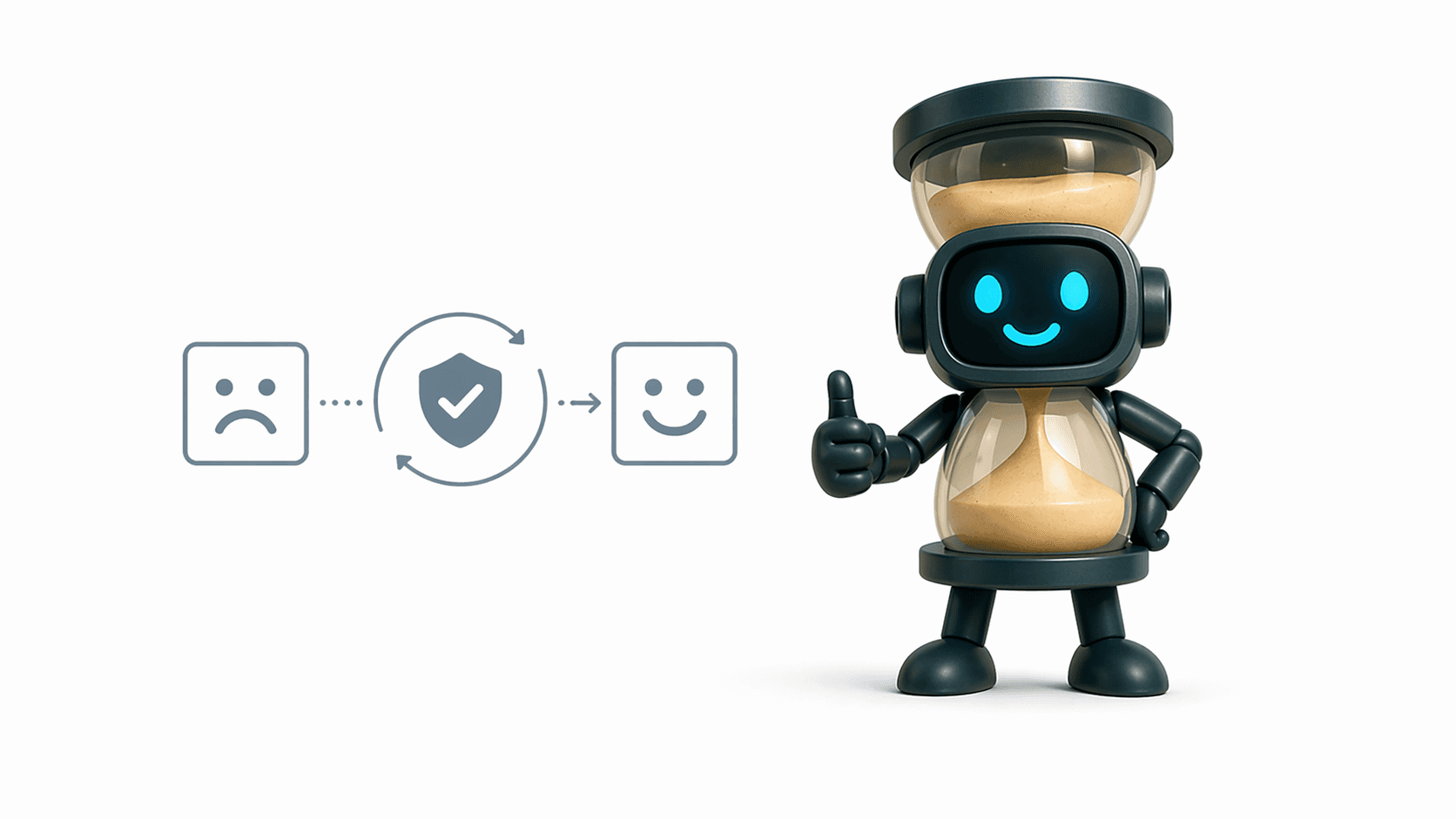
Trust is not rebuilt through promises. It’s rebuilt through consistency.
That means designing workflows where the system behaves predictably, even when reality introduces variation.
One way to do that is by defining clear boundaries. What the AI handles fully. Where human input is required. How exceptions are managed without breaking the flow.
Another is aligning data at the source. If teams interpret or input information differently, no system will produce reliable outputs. Standardizing that input layer has a bigger impact than most expect.
It also helps to remove unnecessary complexity. Many systems lose trust because they try to do too much. Narrowing the scope and getting a smaller part working reliably often creates more confidence than a broad but inconsistent setup.
This is not about making the system perfect. It’s about making it dependable.
What trusted AI systems actually enable K.B Consultancy conclusion
When teams trust a system, their behavior changes.
They stop checking everything. They act on outputs with confidence. Work moves faster because decisions don’t get stuck in validation loops.
That’s where growth starts to accelerate again.
Not because the AI is more advanced, but because it’s actually being used as intended.
Behind that trust is rarely just better technology. It’s clearer processes, better alignment, and systems designed around how the business really operates.
That’s the part most companies underestimate.
And it’s usually the part that makes the difference between automation that looks good on paper and systems that actually support growth.
7 April 2026