What Looks Like an AI Automation Problem Is Usually a Business Consulting Problem
It usually starts with frustration.
A workflow isn’t working as expected. Automation feels unreliable. The AI outputs don’t quite match reality. Something is off, and the natural conclusion is that the technology needs fixing.
So teams look for better tools. Smarter models. More automation.
But in most cases, that’s not where the real issue sits.
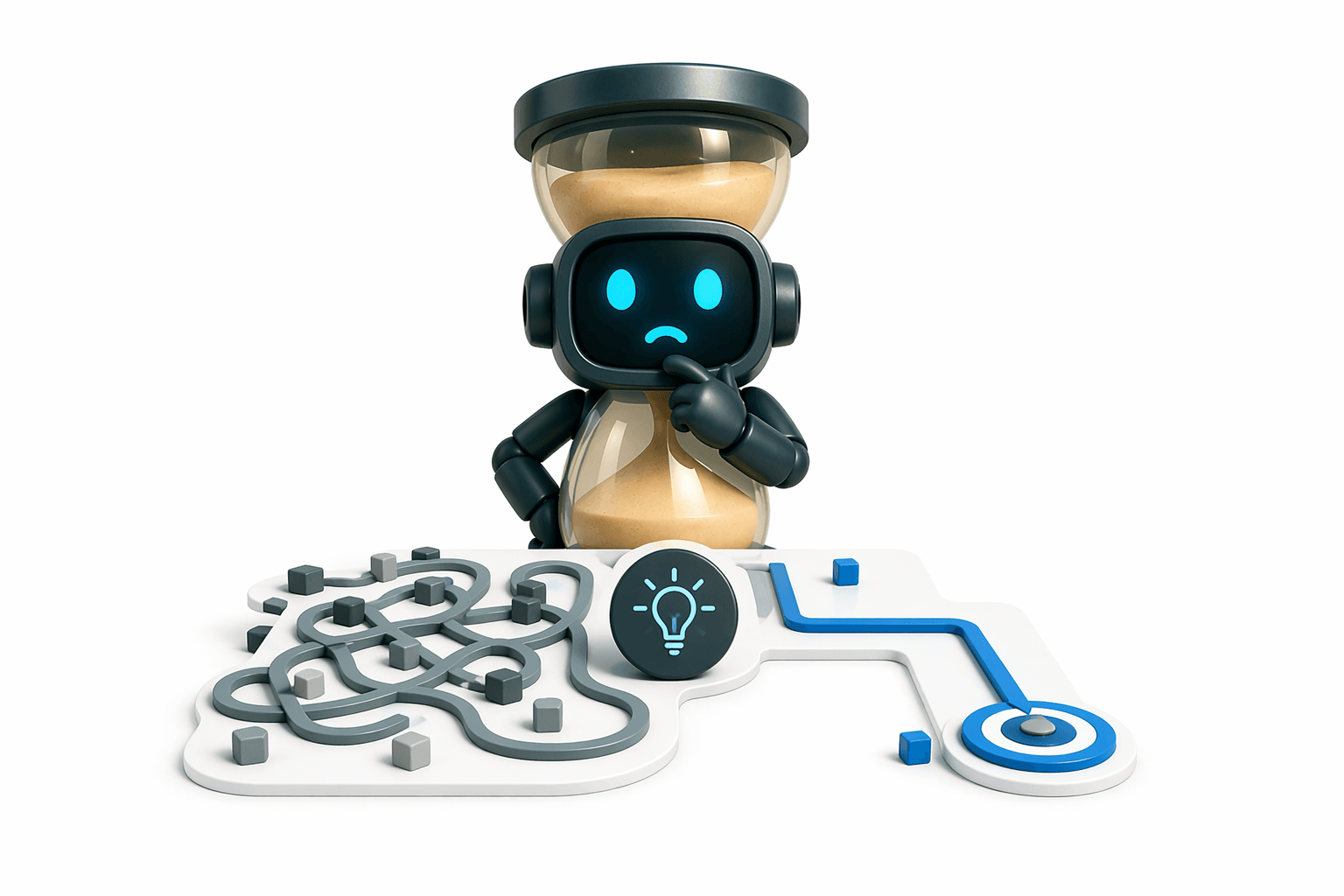
What looks like an AI problem is often a business problem that hasn’t been properly addressed.
Why AI automation problems are often business consulting problems K.B Consultancy insight
Automation doesn’t create structure. It depends on it.
If a process is unclear, inconsistent, or constantly changing, automation will reflect that. Not fix it. It simply executes what it’s given.
This is where many companies misread the situation. They see outputs that don’t align with expectations and assume the system is failing. In reality, the system is doing exactly what the underlying process allows it to do.
At K.B Consultancy, this is a common turning point. A company comes in looking to “improve automation,” but once we look closer, the issue is rarely technical. It’s operational.
Inputs vary between teams. Definitions are not aligned. Steps are skipped or handled differently depending on who is involved. The automation layer sits on top of all of that, trying to make sense of something that was never clearly structured.
The gap between tools and how businesses actually operate K.B Consultancy perspective
Most software assumes a level of consistency that doesn’t exist in real operations.
It expects clean data, clear ownership, and predictable flows. But businesses are messy by nature. Especially as they grow. New tools get added, teams evolve, responsibilities shift.
Over time, the way work actually happens drifts away from how it was originally designed.
This creates a gap.
On one side, you have systems that expect structure. On the other, you have day to day operations adapting in real time. Automation sits right in the middle, and that’s where friction shows up.
Trying to solve that by adding more tools usually increases the complexity. Now you have more systems trying to interpret the same inconsistent inputs.
Where business consulting changes the outcome of AI systems K.B Consultancy approach
This is where business consulting starts to matter more than automation itself.
Instead of asking how to improve the system, the focus shifts to understanding how work actually flows.
Where does information enter the process. Who owns each step. What decisions are being made, and based on what criteria. Where does work slow down or get reinterpreted.
These questions sound basic, but they’re often the missing layer.
At K.B Consultancy, mapping this out tends to expose the real issues quickly. Not in a theoretical way, but in how teams actually operate.
Once that structure is clear, automation becomes much simpler. Not because the tools changed, but because they now have something stable to work with.
Why fixing the process is more effective than upgrading the AI K.B Consultancy observation
There’s a temptation to keep improving the technology.
Better prompts. More integrations. Advanced models. It feels like progress, and sometimes it is.
But if the process feeding the system remains inconsistent, those improvements have limited impact.
You might get slightly better outputs, but the underlying variability still exists. Teams still interpret things differently. Exceptions still require manual fixes. Trust in the system doesn’t improve much.
Fixing the process, on the other hand, changes everything downstream.
Inputs become consistent. Decision points are clear. Responsibilities are defined. Suddenly, the same AI system performs differently, because the environment around it has changed.
This is often the moment companies realize the issue was never about capability. It was about structure.
AI automation that works is built on business clarity K.B Consultancy conclusion
AI is powerful, but it’s not a shortcut around operational clarity.
If the business doesn’t know how its own processes should run, no system will be able to enforce that.
What looks like an automation problem is usually a signal. Something in the way work is structured, communicated, or executed isn’t aligned.
Address that first, and automation starts to make sense.
Ignore it, and you’ll keep chasing better tools without seeing meaningful improvement.
That distinction is easy to miss, but it’s where most of the real progress happens.
8 April 2026