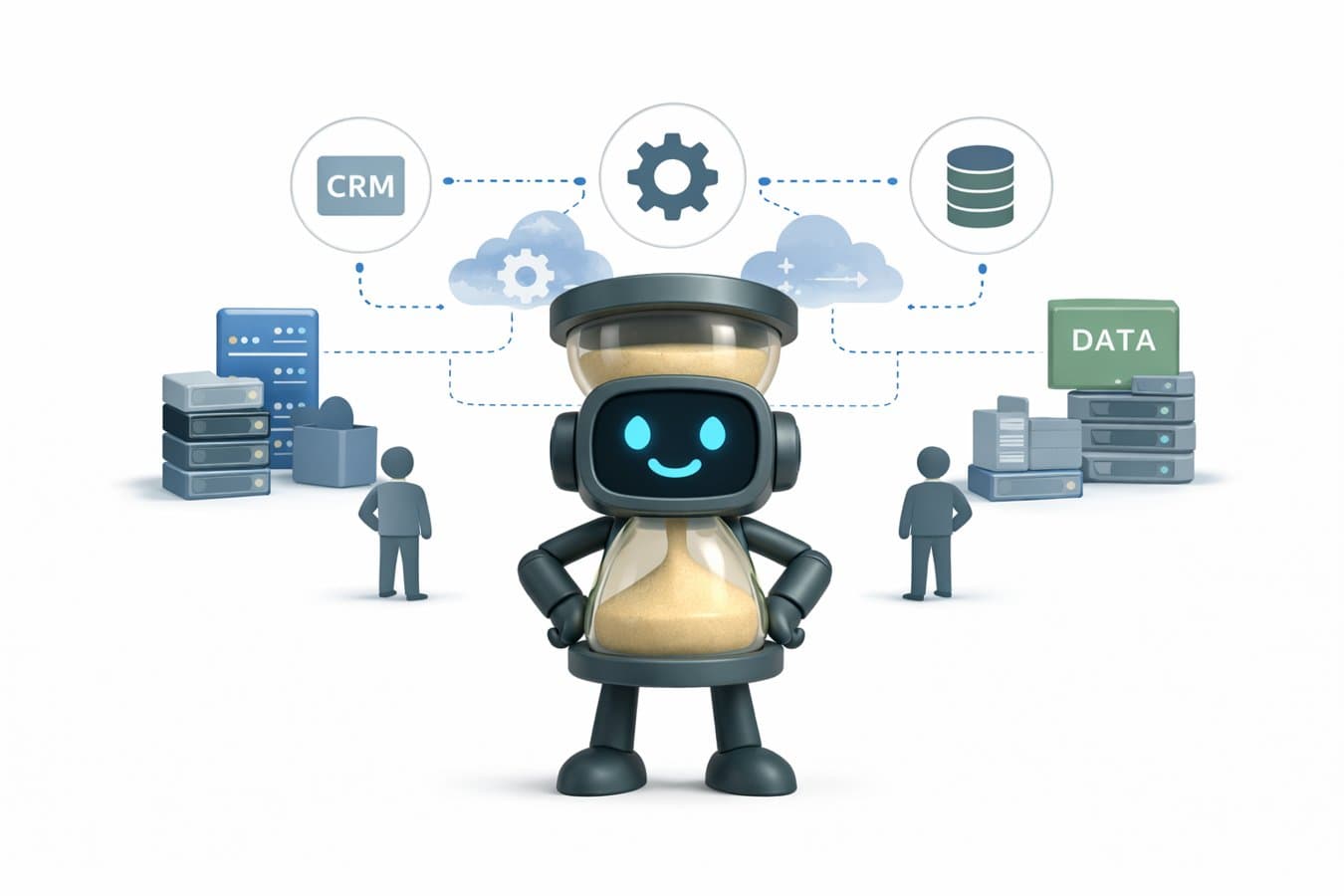
Scaling AI Systems Break First Between Your Software, Data, and Teams
Scaling AI sounds like a technical challenge. More models, more data, better infrastructure. That is where most of the attention goes.
But when things start to break, it is rarely the model.
It is the connection between systems. The way data moves. The way teams interact with both. That is where friction builds up quietly until the whole setup starts to feel unreliable.
You do not notice it in the early stages. Everything works well enough. Then usage increases, and small inconsistencies start compounding.
Where AI Systems Fail Between Software and Integration Layers at K.B Consultancy
Most companies build their AI layer on top of an existing stack. CRM, internal tools, support systems, reporting platforms. Each one serves a purpose, but they were not designed to work as a single system.
So AI ends up sitting in the middle, trying to pull data from all of them.
This is where the first cracks appear.
Data formats do not match. APIs behave differently under load. Updates in one system do not reflect in another. What looked like a connected workflow becomes a chain of dependencies that is harder to manage than expected.
The issue is not that integration is missing. It is that it is often treated as a one time setup.
At K.B Consultancy, integration is treated as part of the system itself. Not a connector that gets configured once, but something that needs to be structured, monitored, and adjusted as the business evolves.
Because once AI depends on that layer, any inconsistency gets amplified.
Data Quality Issues That Break AI Automation in Business Operations
Data problems rarely show up in clean demos.
They show up when the system is used daily by different people, across different teams, each with their own way of inputting information.
One field gets skipped. Another gets filled differently. Over time, the dataset becomes inconsistent, even if the process looks structured on the surface.
AI systems rely on patterns. When the input is unstable, the output becomes unreliable.
This is usually where trust starts to drop.
Teams begin double checking results. They create parallel processes to validate outputs. Slowly, the automation loses its purpose.
At K.B Consultancy, data is not treated as a byproduct of the process. It is part of the process design itself.
If the system depends on clean input, the workflow has to make that easy and natural. Not forced, not dependent on perfect behavior.
Otherwise, scaling only increases the noise.
Why Teams Are the Weakest Link in Scaling AI Systems
It is easy to blame tools or data, but most issues trace back to how teams interact with the system.
People do not follow processes perfectly. They adapt. They prioritize speed when needed. They skip steps that feel unnecessary.
When AI systems are introduced, they often assume the opposite. Structured input, consistent usage, predictable behavior.
That mismatch creates friction.
Some teams try to enforce stricter rules. Others ignore the system when it slows them down. Neither approach solves the problem.
At K.B Consultancy, systems are built with the assumption that behavior will vary.
That changes how workflows are designed.
Instead of rigid paths, there are checkpoints. Instead of blocking errors, there are recovery options. The system guides behavior without forcing it too aggressively.
This is not about lowering standards. It is about making the system usable in real conditions.
Because if people avoid it, it does not matter how well it was built.
Aligning Software Development, Data, and Teams for Scalable AI
Scaling works when these three layers move together.
Software defines what is possible. Data defines what is reliable. Teams define what actually happens.
If one of them falls behind, the system starts to feel inconsistent.
This is why scaling AI is less about adding capability and more about aligning existing parts.
Software development needs to focus on flexibility, not just functionality. Data needs to be structured without becoming a burden. Teams need systems that support how they already work, while gradually improving it.
At K.B Consultancy, this alignment is where most of the value is created. Not in building something entirely new, but in making sure what already exists starts working as one system.
That is what allows AI to scale without constant friction.
What Scaling AI Actually Requires in Practice
There is a shift happening here as well.
Companies are moving away from isolated AI use cases toward systems that need to perform consistently across the business.
That raises the bar.
It is no longer enough for AI to work in one workflow. It has to hold up across multiple teams, tools, and scenarios.
That only happens when the foundation is stable.
Clear integrations. Reliable data. Workflows that reflect real behavior.
Without that, scaling AI just exposes the gaps faster.
With it, the system starts to feel less like an experiment and more like part of the operation.
And that is usually the point where AI stops being interesting and starts being useful.
4 April 2026