Enterprise AI Infrastructure: Building Foundation for Production-Scale Automation
Most AI projects don’t fail because the models are bad. They fail because the environment around those models cannot support them.
It usually starts well. A few automations, a pilot use case, maybe even something customer-facing. Then growth hits, and things begin to break. Data stops syncing properly. Workflows become inconsistent. Outputs can’t be trusted the same way they were in the beginning.
That is not an AI problem. It is an infrastructure problem.
If the foundation is weak, scaling automation only exposes it faster.
What Enterprise AI Infrastructure Actually Looks Like in AI & Automation at K.B Consultancy
There is a tendency to overcomplicate infrastructure discussions. In practice, it comes down to a few core components that need to work together without friction.
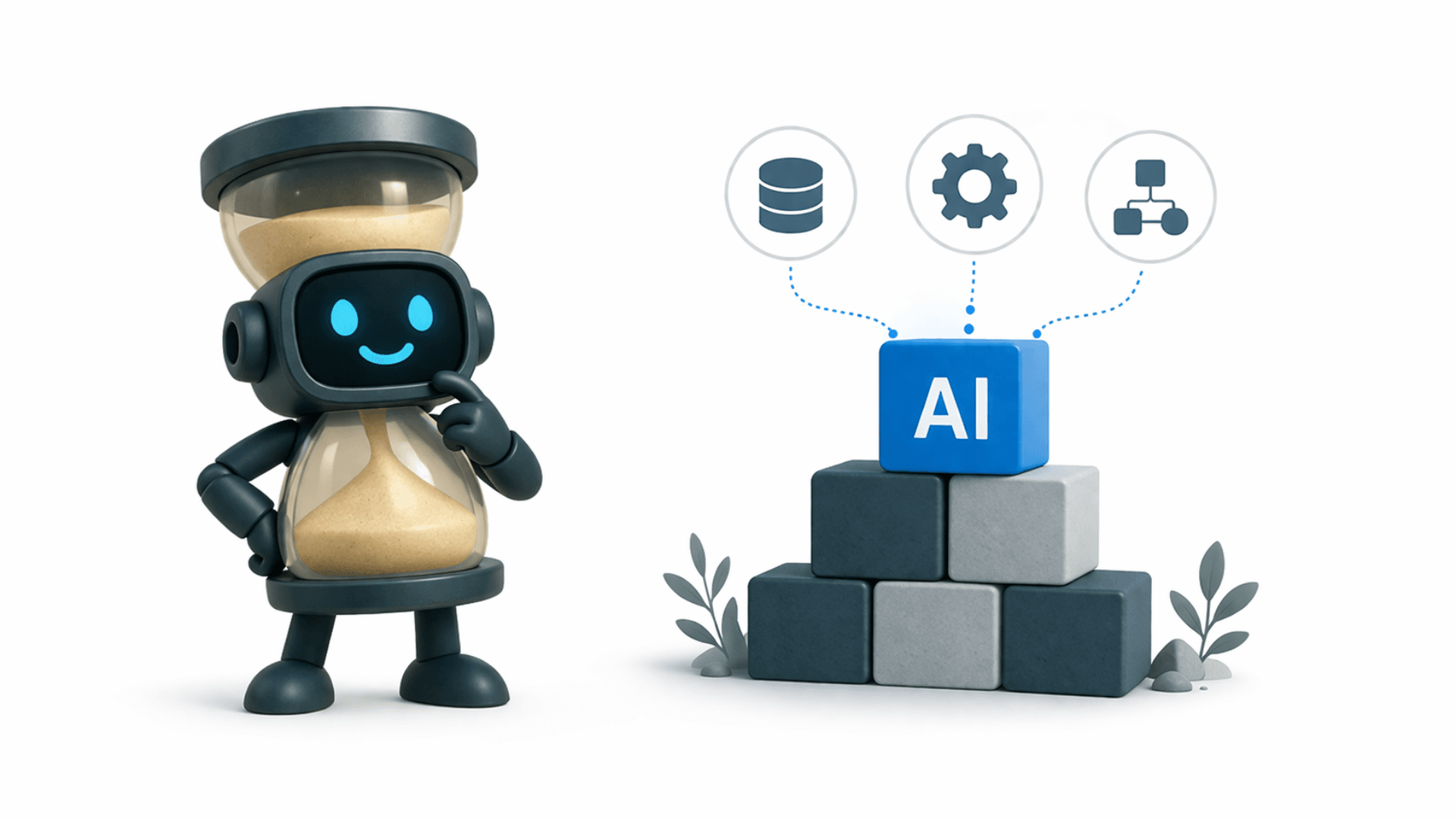
Data systems are the starting point. Not just storing data, but structuring it so it can move across tools and processes without constant manual correction. Clean and connected data is what allows AI systems to make consistent decisions. Without it, outputs become unreliable very quickly.
Then come workflow engines. This is where automation actually lives. These systems define how tasks move, how decisions are triggered, and how different tools interact. If workflows are unclear or fragmented, automation becomes unpredictable. You might save time in one area while creating confusion in another.
AI models sit on top of this. They are the decision layer. But they are only as good as the data they receive and the workflows they operate in. A strong model inside a weak system still produces weak outcomes.
This is why infrastructure cannot be treated as a technical layer only. It is operational. It reflects how a business actually runs.
At K.B Consultancy, this is usually where the real work begins. Before introducing new AI capabilities, we map how information flows, where decisions are made, and where systems disconnect. Most issues are not caused by missing technology, but by systems that were never designed to work together.
Why Scalable AI Infrastructure Determines Success in Business Consulting at K.B Consultancy
There is a clear difference between companies that experiment with AI and those that successfully scale it.
Scalability depends on whether systems can handle increased volume without adding complexity. If every new automation requires manual oversight, the system is not scalable. It is just faster in isolated cases.
Reliability becomes critical as soon as AI is involved in real operations. Teams need to trust the output. If results vary without clear reasons, people start double checking everything. That defeats the purpose of automation.
Growth puts pressure on both of these areas. More data, more processes, more edge cases. Without a solid infrastructure, each new layer adds friction instead of value.
We often see businesses trying to fix this by adding more tools. Another platform, another integration, another dashboard. It rarely solves the issue. If the underlying structure is unclear, more tools only increase the number of failure points.
Strong infrastructure simplifies instead of expanding complexity. It creates a system where data flows predictably, workflows behave consistently, and AI outputs can be trusted without constant validation.
Building AI Infrastructure That Supports Real Automation and Software Development at K.B Consultancy
The difference between a working setup and a scalable one is not always visible at first.
A working setup handles current needs. A scalable one anticipates change.
This is where design decisions matter. How data is structured. How systems communicate. Where decisions are centralized versus distributed. These are not technical details you can fix later without consequences.
For example, a well built integration removes the need for manual data handling entirely. A poorly built one still requires people to check, adjust, and correct. On paper, both are “integrated.” In practice, one reduces workload, the other hides it.
The same applies to dashboards and internal tools. If teams still rely on separate sources to validate information, the system is incomplete. Real infrastructure replaces effort, it does not just rearrange it.
At K.B Consultancy, we focus on building systems that people actually rely on. That means fewer workarounds, fewer manual corrections, and clearer ownership of how processes run. It is not about adding layers. It is about removing friction.
AI Infrastructure as the Foundation for Long-Term Growth at K.B Consultancy
There is a point where AI stops being a competitive edge and becomes expected. That point is approaching quickly.
When that happens, the difference between companies will not be who uses AI, but who can operate it reliably at scale.
Infrastructure is what determines that.
A strong foundation allows businesses to expand automation without hesitation. New use cases can be added without breaking existing ones. Teams can trust the system instead of working around it.
Without that foundation, every step forward comes with risk. More automation leads to more uncertainty, not less.
From what we see, companies that invest early in infrastructure move faster later. Not because they have more tools, but because their systems are built to handle growth.
AI is only as strong as what supports it. If the foundation is right, everything built on top becomes easier.
28 March 2026